Design the space before choosing the board
Good decking starts with how you want to use the garden. A dining table needs room for chairs and circulation. A quiet seating corner needs privacy and a comfortable outlook. A raised terrace needs carefully considered edges, steps and access.
We look at the relationship between doors, lawn, planting and any existing patio so the deck feels intentional rather than added afterwards. Board direction, a picture-frame border and the position of steps can make a small area feel calmer or give a larger terrace a clearer structure.
From a simple seating platform to a multi-level scheme, the design, materials and subframe should work together. We will explain the options rather than expect you to choose from a photograph alone.
Bring the right starting information
A postcode, photographs, rough dimensions and a note of what you want to put on the deck are enough to start a useful conversation. A measured survey follows before the installation specification is agreed.
DECKING IN CONTEXT
See how levels, edges and access change the finished terrace
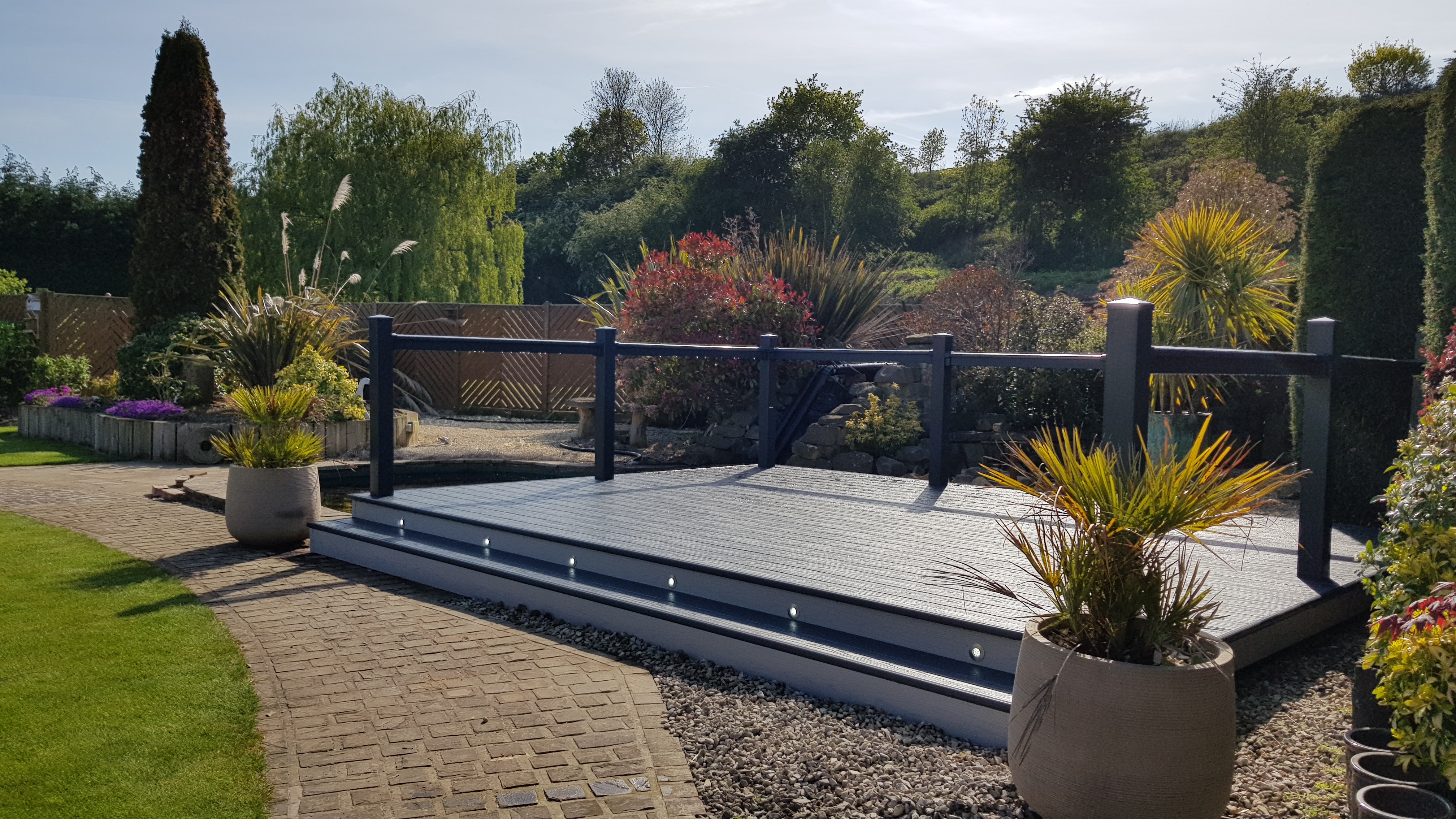 Levels + lighting
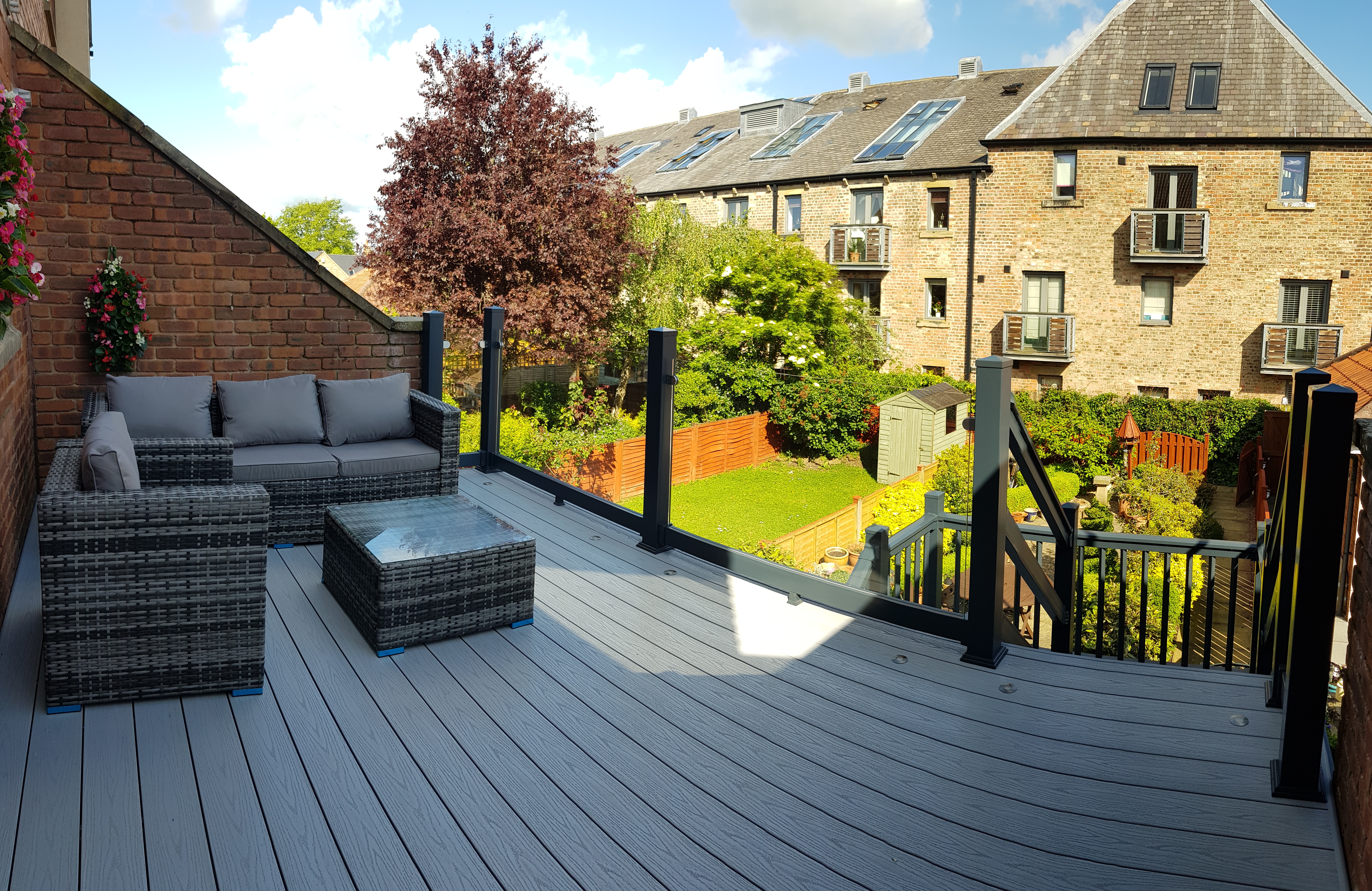 Raised terrace
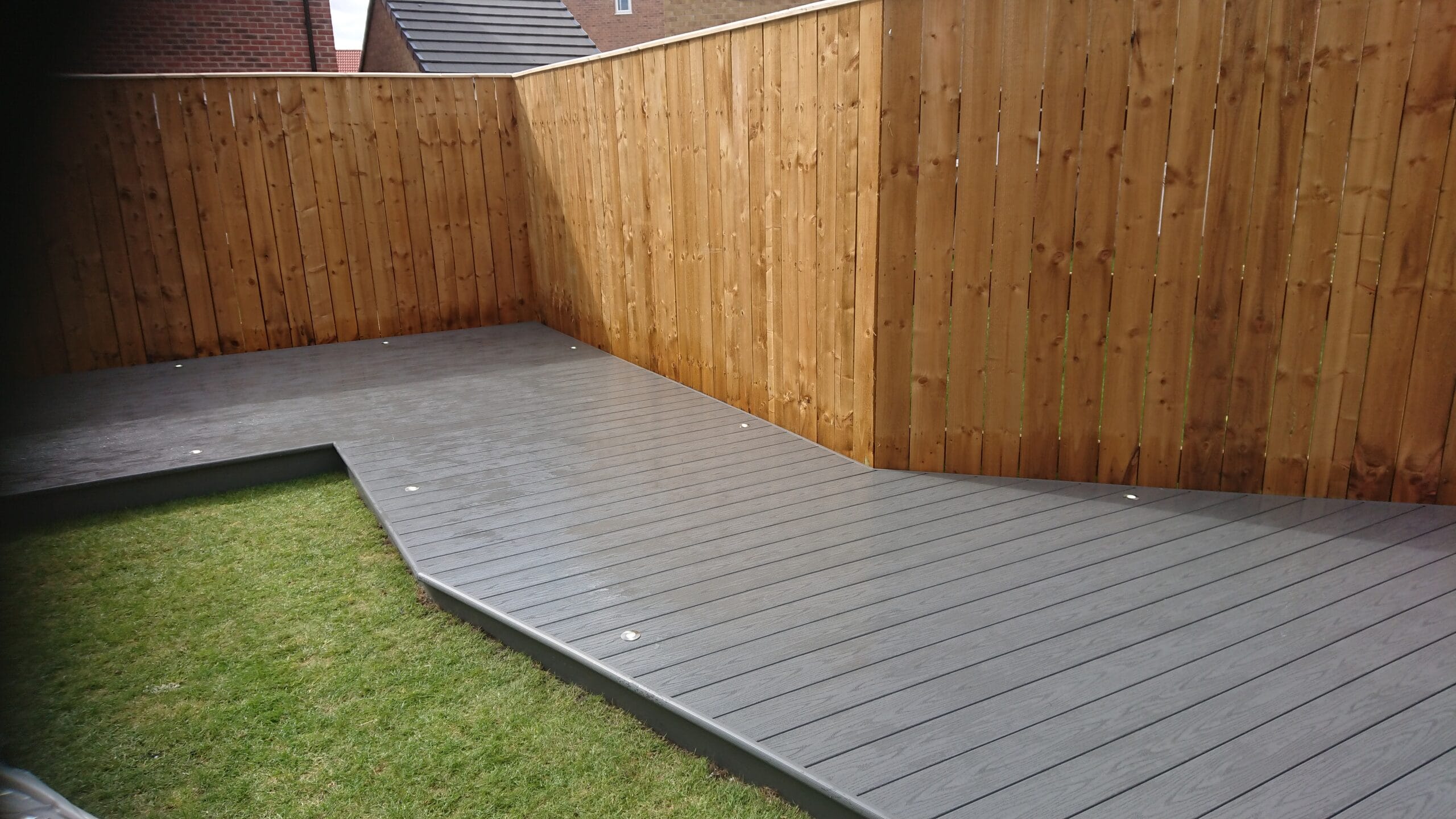 Boards + edges
Understand your decking options
Material, construction and surface finish affect appearance, maintenance and cost. The right choice depends on your site and the specific product being supplied, not simply whether a board is called composite or premium.
uPVC decking
A plastic decking option with a consistent finish and no timber fibres in the board. Compare the available profiles, colours, fixing details and suitability for your installation.
Composite decking
A blend of wood fibres and polymers, with different core and capping options. A useful route to a timber-inspired appearance without the same regular staining routine as traditional timber.
Premium finishes
For projects where tonal variation, finish detail and board performance are central to the design. Compare the actual samples, system specification and warranty rather than relying on a label.
The structure you do not see matters just as much
A carefully fitted surface needs suitable support. Ground conditions, loading, joist spacing, fixing methods, expansion gaps and ventilation all belong in the installation specification.
The subframe material should be chosen for the site and the board system. Reusing an old timber frame is not automatically the best saving: its condition, dimensions and remaining service life need to be assessed first.
Drainage deserves the same attention as the visible finish. Levels should work with thresholds and existing drainage, while leaving appropriate access to drains, services and ventilation openings.
Finish the edges, not just the middle
Fascias, corners, board ends and steps determine how finished a deck looks. We discuss whether a clean single-level outline, a framed border or a change in direction best suits the layout.
Raised edges, handrails and balustrades are considered around the actual change in level and how the space will be used. A clear route through the garden should remain even when furniture is in place.
Hot tubs, large planters and other concentrated loads need specific consideration. The supporting structure must be designed for the intended use, rather than assuming ordinary decking boards provide the necessary support.
Compare complete installations
| Element | What a useful specification explains |
|---|---|
| Boards and finish | Named board system, colour, profile, border and surface treatment. |
| Preparation and structure | Removal, disposal, ground preparation, supports and subframe. |
| Access and safety | Steps, edge protection, handrails, access panels and drainage. |
| Handover | Care instructions and the separate scope of product and installation warranties. |
Overall area, access, levels and the amount of preparation can change the cost substantially. We quote the project as a complete scope, not a board-only price that leaves the important work unspecified.
Lower maintenance, not no maintenance
Regular sweeping, removal of leaves and suitable cleaning help a deck stay attractive. Shaded or tree-covered areas need particular attention so debris and organic growth do not build up.
Follow the selected manufacturer’s instructions for detergents, pressure washing, furniture feet, barbecue protection and stains. Different board constructions need different care. A slip-resistant surface is not slip-proof, especially if it is dirty, icy or covered with leaves.
A clear installation journey
Design: agree the layout and the way the deck will be used.
Survey: check levels, access, drainage and the supporting structure.
Specification: choose materials and confirm an itemised scope.
Installation: prepare the site, build the subframe and complete boards and detailing.
Handover: review the finish and care requirements together.
Decking questions
Can decking work on a sloping garden?
A raised or stepped design can create useful space, but the support system, edge protection and route between levels need careful design. We assess the actual site before recommending a layout.
Can you replace boards on my existing frame?
We first check the frame’s condition and compatibility with the new board system. Replacing an unsuitable frame at the same time can avoid a short-lived improvement.
Which colours should I consider?
Compare samples beside your brickwork, paving and window frames. Warm natural tones and cooler greys create different effects; light, shade and the area covered can change how a small sample appears.
Will the boards need painting?
Many uPVC and composite systems are designed to retain their supplied finish without routine painting or staining. Always follow the care instructions for the specific board chosen.
Can I include lighting or a pergola?
Yes, those elements can be planned together. Fixings, electrical routes and any additional structural loads should be considered before the deck is built.
Is a site visit needed before a final price?
A measured survey is the best way to establish the installation scope. Photographs and rough measurements help with the first discussion but cannot reveal every site condition.
Find inspiration for your layout
Let’s design your outdoor space
Tell us how you would like to use the garden and where you are based. We will help you work through the design, materials and next steps.
DECKING DETAILS
Look beyond the board colour
Levels, balustrades, lighting, steps and the relationship with the garden all change how a finished deck feels.
Lighting + balustradeRaised layouts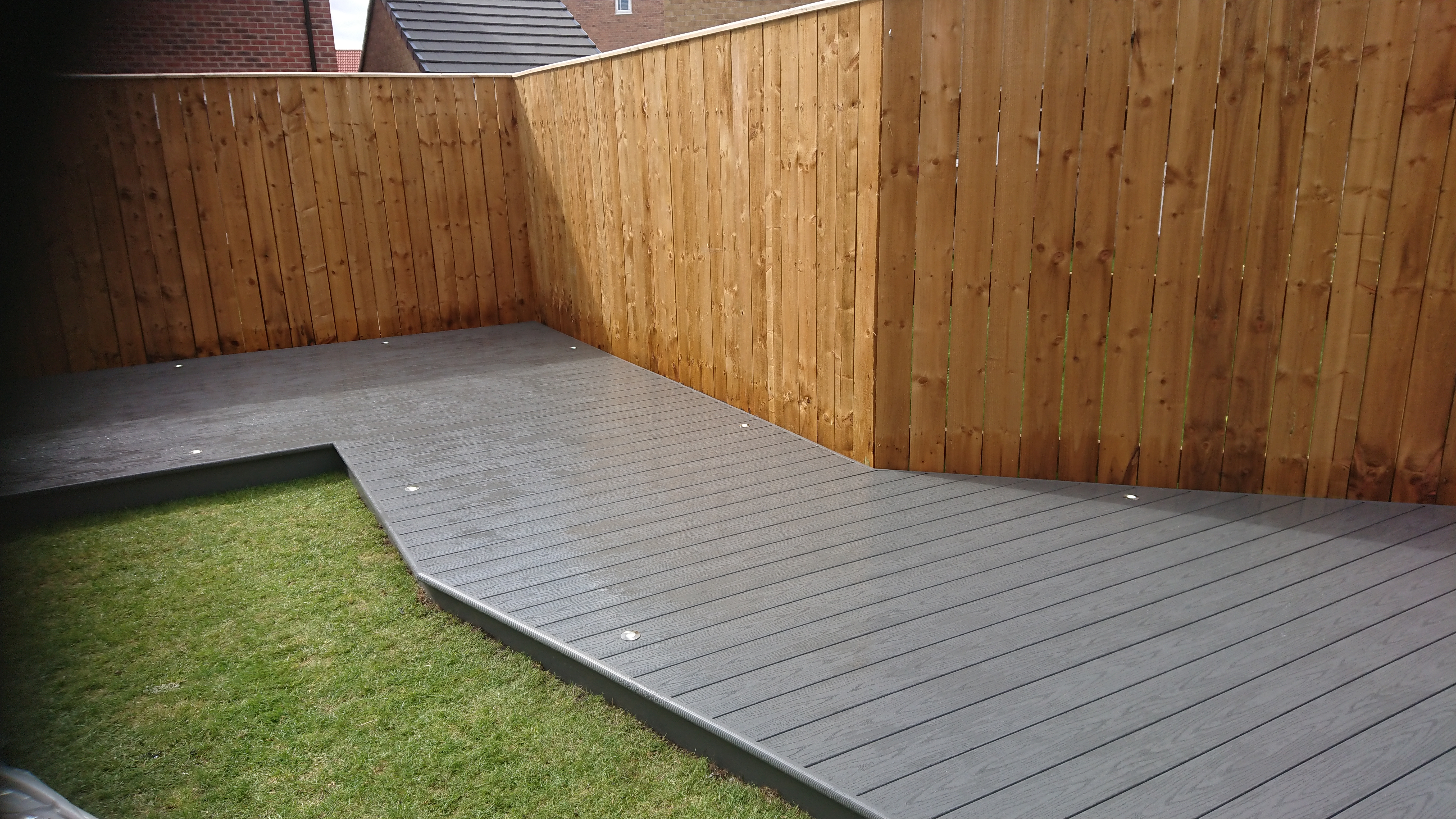 Finishing detail
 Outdoor living
 Finished installation
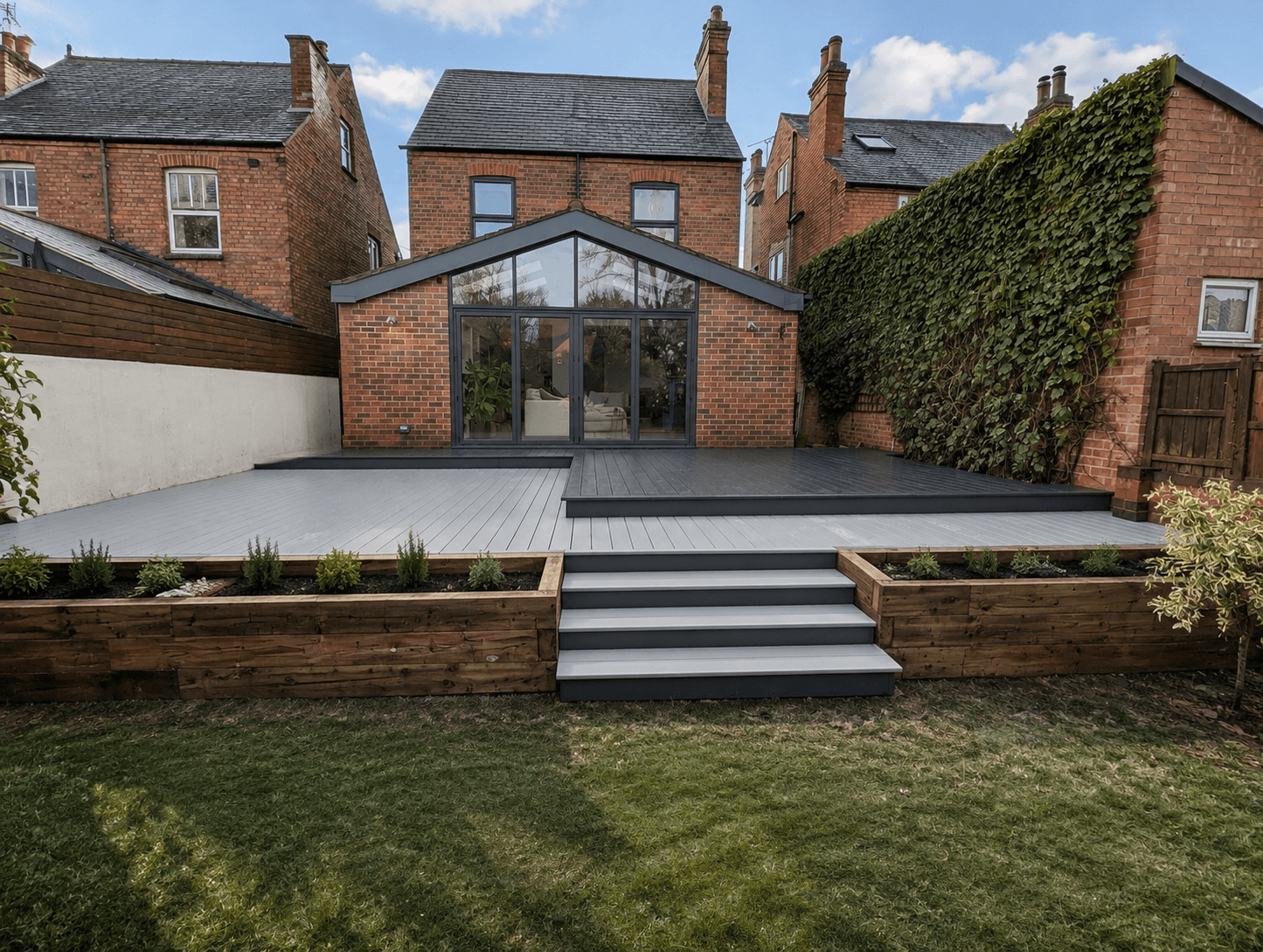 Outdoor seating