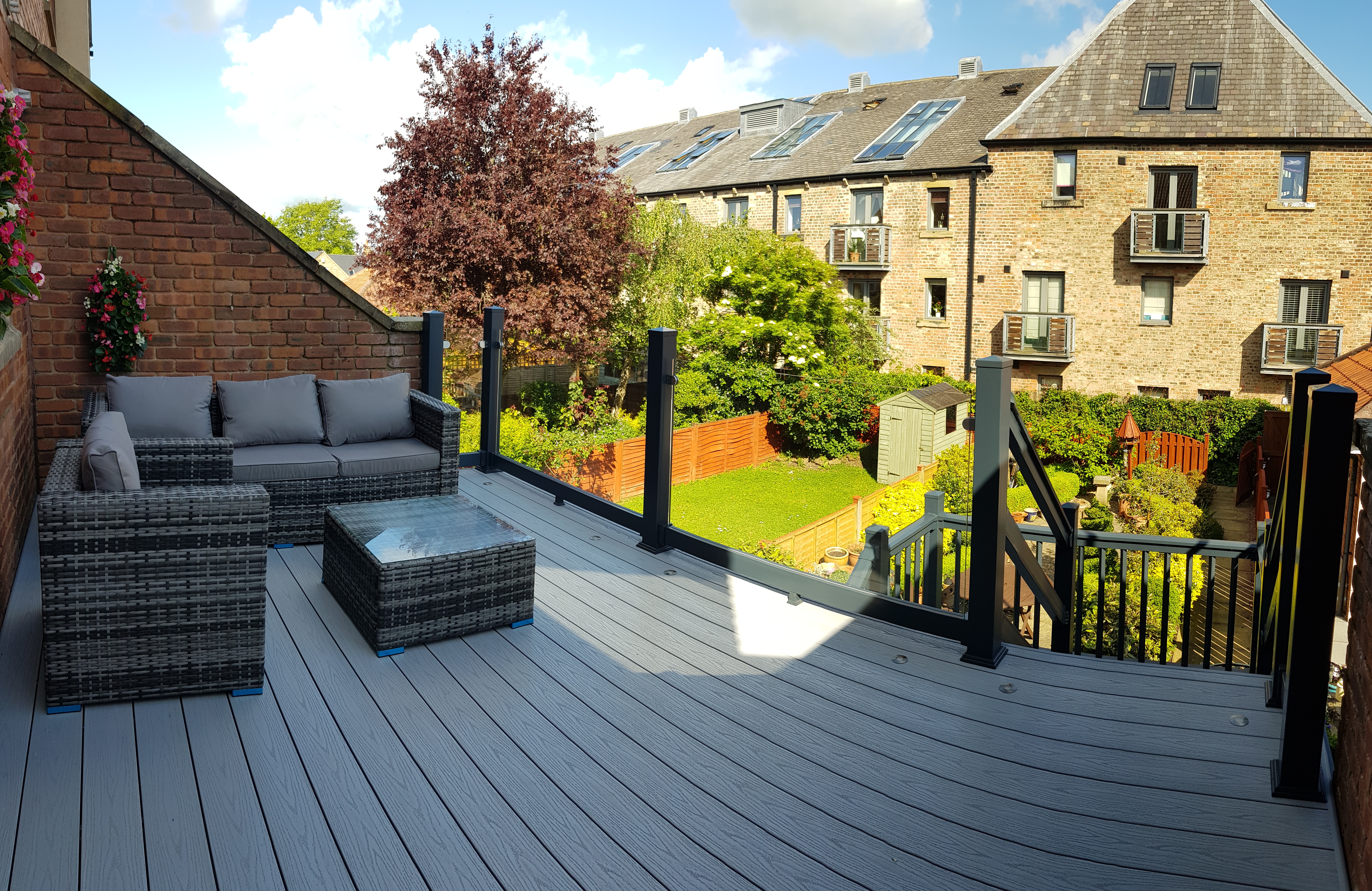
uPVC decking, considered as a complete system
A consistent finish, practical care and a board without timber fibres. uPVC is one route to a low-maintenance terrace, provided the selected profile and supporting structure suit the way you will use the space.
What makes uPVC different?
uPVC decking is a plastic board system rather than a wood-fibre composite. Profiles, surface textures and fixing arrangements vary between products, so the specification should identify the actual board rather than simply say plastic decking.
It is worth considering where you want a regular, clean finish and a straightforward care routine. The choice should also reflect the appearance of your home, the amount of shade, exposure to the sun and the way the terrace connects to existing surfaces.
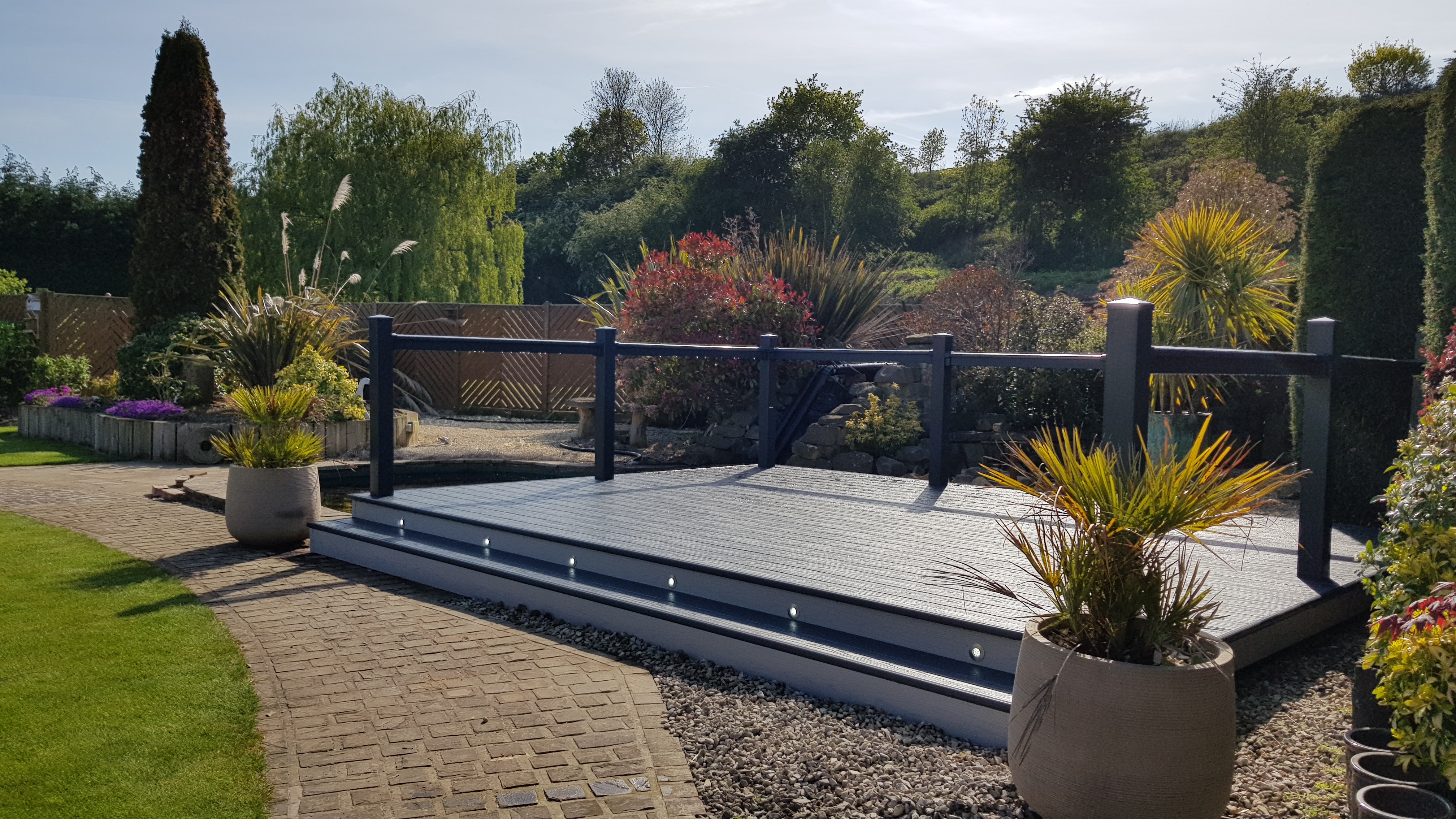
Look at samples in the garden, not just on a screen. A large area of pale grey, a warmer neutral tone and a darker border can each change how the space feels. We can discuss the currently available options before a named finish is included in your proposal.
Compare the specification
Board profile and thickness, surface texture, colour, support spacing, fixing method, expansion allowance and the scope of the product warranty should all be clear.
A tidy finish starts underneath
The board and subframe must be compatible. Correct spans, supports and fixing details matter more than a board’s appearance when it comes to the completed installation.
We consider the ground, existing drainage and the route to doors and paths. Appropriate gaps and ventilation should be allowed for, and drains or services should not become inaccessible under a new surface.
Steps, fascias and edge protection are designed with the same care as the main deck. Matching accessories and a considered perimeter can make the difference between a neatly integrated terrace and a platform that looks unfinished.
Care and everyday use
Low maintenance still means keeping the surface clean. Remove leaves, wash away dirt with suitable products and follow the manufacturer’s guidance for marks, furniture and pressure washing.
Shade, trees and standing debris affect every outdoor surface. No deck should be described as slip-proof, and care is needed during wet or icy weather.
Discuss heavy planters, cooking equipment and hot tubs before the design is finalised. A special loading or heat requirement should be addressed in the specification, not left to an assumption after installation.
Is uPVC right for your garden?
Compare it with composite decking and the premium finish options. The best choice balances appearance, maintenance, the board system’s documented performance and the full installation cost.
Our proposal should set out preparation, structure, boards, edges and any steps or balustrades. Product cover and workmanship cover are different things; both should be explained with their relevant terms.
Will it need staining or painting?
uPVC systems are generally selected for their supplied finish rather than routine staining. Follow the instructions for the exact board, including any restrictions on coatings or cleaning products.
Can it be fitted onto an old deck frame?
Only if the frame is sound and compatible with the new system. Its condition and support spacing need to be checked before reusing it.
Can the design include steps and railings?
Those details can form part of the brief. Their position, support and finish are assessed alongside the main deck, particularly where there are changes in level.
Compare samples. Plan the whole installation.
UPVC DECKING SYSTEMS
Judge the whole system, not only the top face
Board profile, subframe, fixings, expansion detail, edging and steps all influence how a uPVC deck performs and looks once installed.
Surface + profile
- Board texture and colour
- Visible edge treatment
- Slip characteristics
- Cleaning requirements
Structure + finishing
- Supporting frame specification
- Ventilation and drainage
- Steps and level changes
- Balustrade integration